Wine Cellar Cabinets in Fairfax, VA: Custom Wine Storage Designed for Luxury Homes
Wine collecting has become a defining feature of many luxury homes across Fairfax, Virginia, and the Washington, DC metro area. As collections grow, homeowners quickly realize that proper storage is essential, not only for preserving wine quality but also for showcasing a curated lifestyle.
Custom wine cellar cabinets provide a refined solution. They combine craftsmanship, storage precision, and architectural design to create a space where wine can age properly while enhancing the visual appeal of your home.
At Bullseye Wood, our millshop specializes in custom cabinetry and architectural woodwork for high-end residential projects throughout Fairfax and the DC metro region. In this guide, we will walk you through everything homeowners and builders need to know about custom wine cellar cabinets, design options, materials, costs, and installation considerations.
Why Fairfax Homeowners Are Investing in Wine Cellar Cabinets
Fairfax homes increasingly feature dedicated wine storage areas. Rather than relying on standalone wine coolers, many homeowners prefer built-in cabinetry designed specifically for wine collections.
A custom wine cabinet provides several advantages:
1. Proper wine preservation: Wine requires consistent temperature, humidity, and positioning. Custom storage keeps bottles stable and protected.
2. Efficient organization: Cabinet systems can store hundreds of bottles while maintaining accessibility.
3. Architectural integration: Built-in wine cabinets blend seamlessly with kitchens, dining rooms, or basements.
4. Luxury home value: A professionally designed wine cellar adds sophistication and resale appeal.
Homeowners exploring custom cabinetry often begin by reviewing the advantages outlined in our guide on
Benefits of Custom Cabinetry in Fairfax, VAhttps://www.bullseyewood.com/blog/benefits-of-custom-cabinetry-fairfax-va
This level of customization allows your wine storage to complement the design language of your entire home.
Types of Wine Cellar Cabinets for Fairfax Homes
Every wine collection is unique. Custom cabinetry allows designers and cabinet makers to tailor storage solutions based on bottle volume, available space, and aesthetic preferences.
Below are the most common wine cabinet configurations used in Northern Virginia homes.
1. Built-In Wine Cabinets
Built-in wine cabinets integrate directly into existing cabinetry or architectural niches. They are commonly installed in:
Kitchens
Dining rooms
Butler’s pantries
Entertainment rooms
These systems allow homeowners to store their wine collection close to entertaining areas while maintaining an elegant design.
Many Fairfax homeowners incorporate wine cabinets into broader kitchen upgrades. If you're exploring custom kitchen solutions, you may also find inspiration in our guide onLuxury Custom Cabinets for Small Kitchens in Washington DC & the DMVhttps://www.bullseyewood.com/blog/luxury-custom-cabinets-for-small-kitchens-in-washington-dc-amp-the-dmv
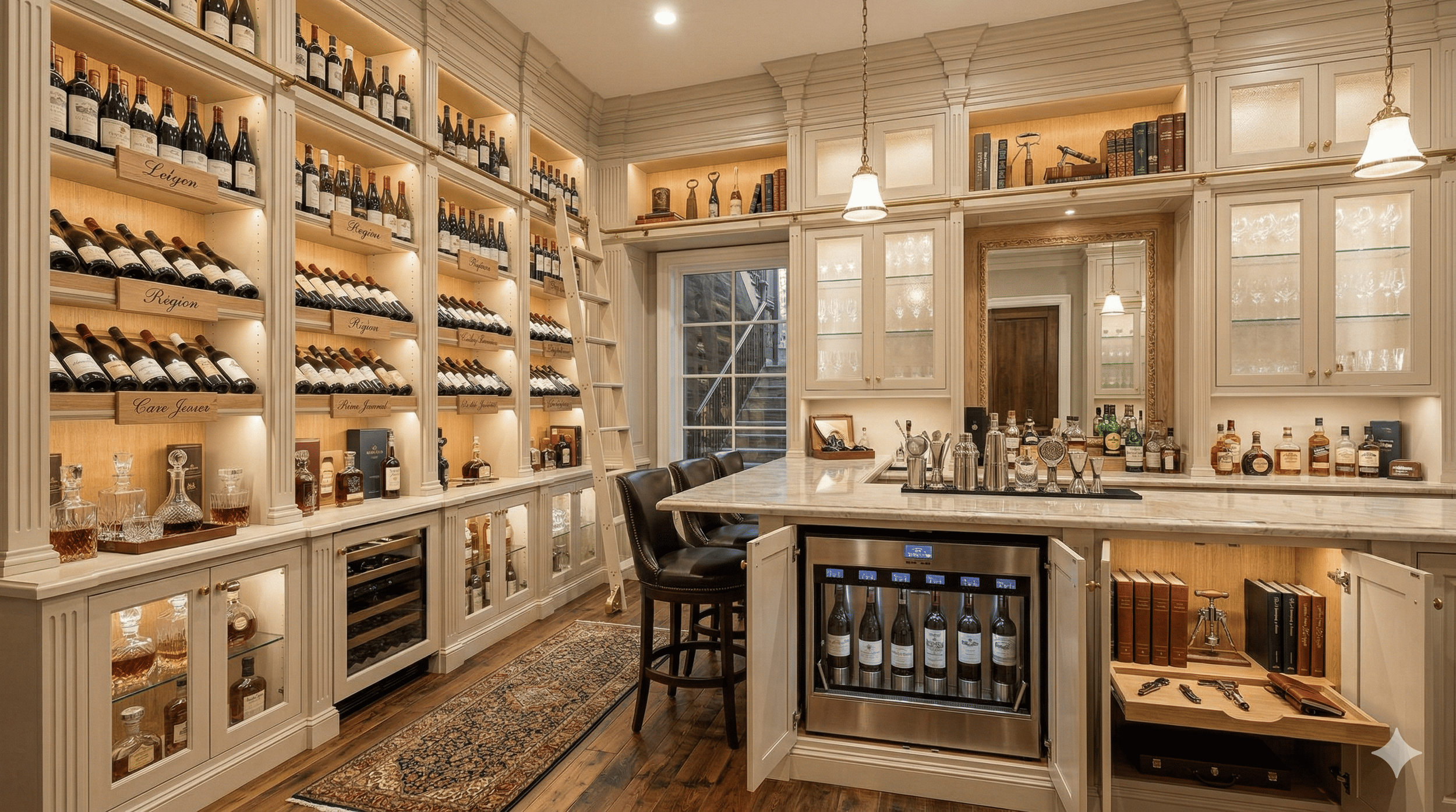
2. Walk-In Wine Cellar Cabinet Systems
For larger collections, walk-in wine rooms provide maximum storage and visual impact.
These systems typically include:
Floor-to-ceiling wine racking
display rows
case storage sections
tasting counters
decorative wood millwork
When designed correctly, a walk-in cellar becomes a focal point of the home.
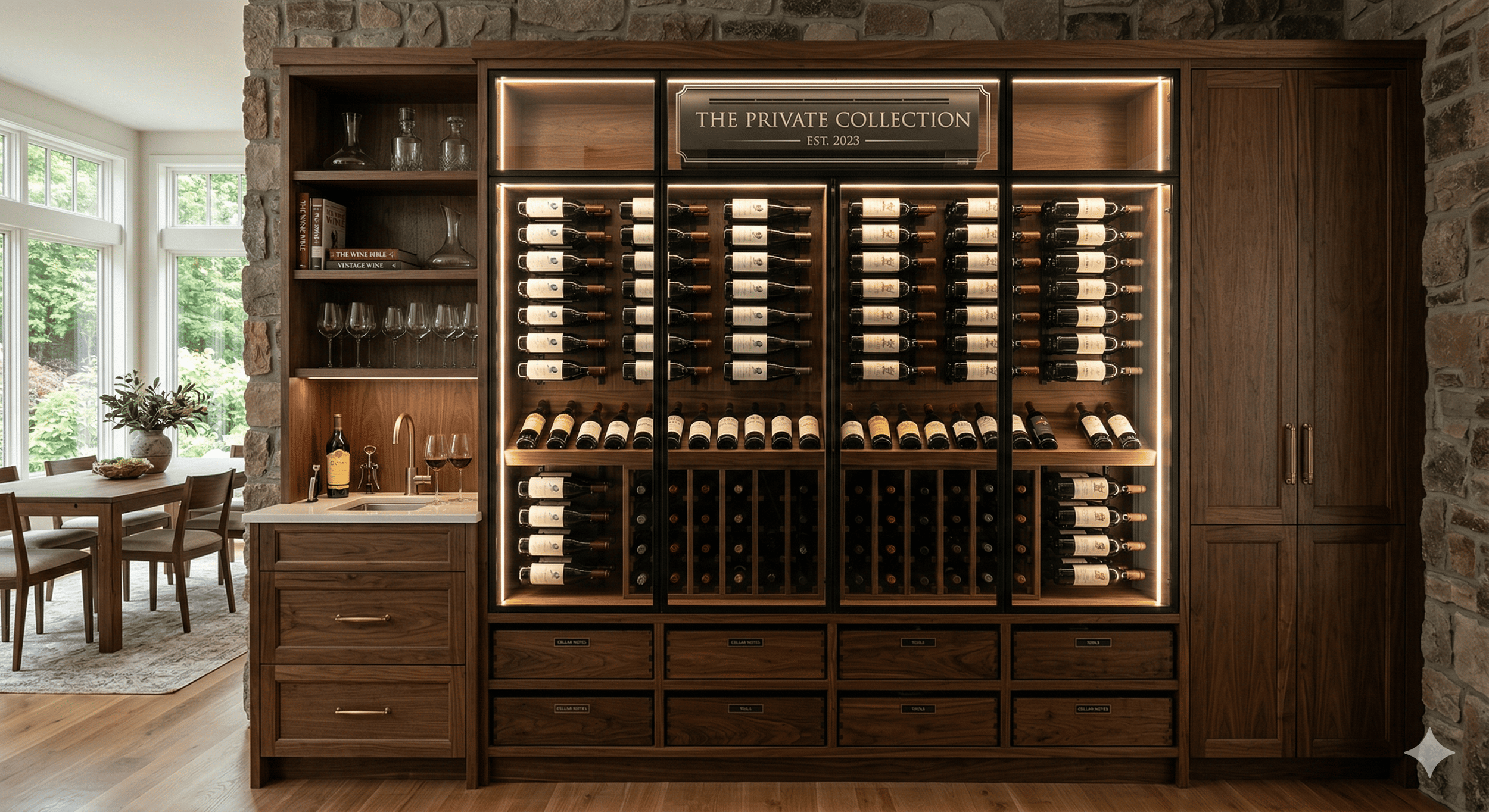
3. Glass Wine Display Cabinets
Modern luxury homes often feature glass-enclosed wine displays. These installations combine custom cabinetry with glass panels and LED lighting.
Popular locations include:
dining rooms
hallways
kitchen feature walls
basement lounges
Glass wine cabinets allow homeowners to showcase their collection while maintaining climate control.
Best Materials for Wine Cellar Cabinets
Material selection is critical when designing wine storage cabinetry. Wine cellars often operate in environments with higher humidity levels, which require stable, durable wood species.
Professional cabinet makers typically recommend the following materials.
1. Mahogany
Mahogany is one of the most popular materials for wine cellars.
Advantages include:
excellent resistance to humidity
dimensional stability
refined grain pattern
rich color tone
Mahogany wine cabinets provide a classic luxury aesthetic.
2. Redwood
Redwood has been used in wine cellars for decades due to its natural resistance to moisture.
Benefits include:
lightweight but strong structure
minimal warping
subtle grain appearance
Redwood works particularly well for large wine rack systems.
3. Walnut
Walnut is often selected for high-end modern wine displays.
Key benefits include:
dramatic dark color
premium visual appeal
strong durability
Walnut cabinets create a striking contrast when paired with glass enclosures and LED lighting.
Wine Storage Conditions Every Cabinet Must Support
Wine is highly sensitive to environmental conditions. Improper storage can cause bottles to age prematurely or lose flavor.
Professional wine cellar cabinets are designed around three core storage principles.
1. Temperature Control
Ideal wine storage temperature ranges between 55°F and 58°F. Temperature fluctuations can accelerate aging and damage wine.
Custom wine cabinets often integrate:
climate-controlled refrigeration units
insulated cabinetry
sealed enclosures
2. Humidity Management
Proper humidity levels range between 50% and 70%.
Low humidity can dry out corks, while excessive humidity can lead to mold growth. Cabinet materials and ventilation must support balanced humidity levels.
3. Bottle Positioning
Wine bottles should be stored horizontally so the liquid remains in contact with the cork. This prevents cork shrinkage and oxidation.
Custom racking systems ensure bottles remain properly positioned while maximizing storage capacity.
Custom Wine Cabinet Design Ideas for Fairfax Homes
Design flexibility is one of the greatest advantages of custom cabinetry. Fairfax homeowners often choose wine storage designs that complement their interior architecture.
Popular wine cabinet design concepts include:
1. Under-stair wine storage: Transform unused space beneath staircases into elegant wine displays.
2. Kitchen wine walls: Integrate wine cabinets alongside refrigerators and pantry storage.
3. Dining room display cabinets: Showcase premium bottles with glass doors and accent lighting.
4. Basement wine tasting rooms: Create a dedicated entertainment space with custom cabinetry and millwork.
The design process typically begins with collaboration between homeowners, architects, and cabinet makers. Builders and designers frequently work with specialized millshops to ensure cabinetry integrates seamlessly into the overall construction schedule.
Our article onIntegrating Custom Cabinets Into Your Build Schedule for DC Contractors and Buildersexplains how cabinetry fits into the construction timeline.https://www.bullseyewood.com/blog/integrating-custom-cabinets-into-your-build-schedule-for-dc-contractors-and-builders
Cost of Custom Wine Cellar Cabinets in Fairfax, VA
Pricing varies depending on cabinet size, wood species, and climate control features. Below is a general overview of wine cellar cabinetry options in the Fairfax market.
1. Small Wine Cabinets
An entry-level option ideal for kitchens, dining rooms, or compact collections. Cost depends primarily on wood species, finish, and the number of storage slots required.
2. Built-In Wine Cabinet Walls
A mid-range investment that typically includes custom racks, cabinetry, and integrated refrigeration. Pricing scales with the size of the installation and the complexity of the storage configuration.
3. Walk-In Wine Cellars
The most significant cabinetry investment is covering large wine rooms with full cabinetry systems, specialty lighting, and climate control. Projects at this scale vary considerably in cost depending on room size, materials, and environmental requirements. A direct consultation with a cabinet maker is recommended for accurate budgeting.
Working with a local millshop allows homeowners to customize materials, storage capacity, and finishes to fit both design goals and budget.
Builders often prefer partnering with experienced cabinet manufacturers. Our guide on Why Builders Should Choose a Local Mill Shop for Custom Cabinetry in Washington DC explains the advantages of local craftsmanship.
The Wine Cabinet Design and Installation Process
Creating a custom wine cabinet involves several stages.
1. Consultation
The process begins by evaluating:
wine collection size
available space
climate requirements
design preferences
Homeowners looking for a trusted cabinet maker can follow the steps outlined inHow to Find a Cabinet Maker in Fairfax, VAhttps://www.bullseyewood.com/blog/how-to-find-a-cabinet-maker-in-fairfax-va
2. Design Development
Cabinet designers create detailed drawings that outline:
rack configurations
cabinet dimensions
wood selections
lighting and display elements
At this stage, homeowners can refine design details before fabrication begins.
3. Millshop Fabrication
Custom wine cabinets are fabricated in a professional millshop environment.
At Bullseye Wood, our team produces precision cabinetry using advanced woodworking equipment and decades of craftsmanship.
Learn more about our production capabilities here:https://www.bullseyewood.com/millshop
4. Installation
Professional installation ensures cabinets align perfectly with architectural features and climate systems.
Installation typically involves:
cabinet assembly
wine rack installation
refrigeration setup
final finishing adjustments
Completed projects can be viewed in our custom cabinetry portfolio:https://www.bullseyewood.com/portfolio
Why Custom Millwork Matters for Wine Cabinets
Wine cellar cabinetry requires precision craftsmanship. Poorly built racks can lead to structural issues, bottle instability, and long-term maintenance problems.
Professional cabinet manufacturers provide:
exact bottle spacing
durable joinery methods
humidity-resistant finishes
long-lasting structural integrity
A professional millshop also ensures the cabinetry aligns with architectural plans and contractor timelines.
Homeowners interested in the craftsmanship behind our projects can learn more about our company here:https://www.bullseyewood.com/about
Choosing the Right Cabinet Maker in Fairfax
Selecting the right cabinet manufacturer is essential for a successful wine cellar project.
Key factors to consider include:
1. Experience with custom millwork: Look for cabinet makers specializing in architectural woodwork.
2. Local expertise: Local manufacturers understand regional construction standards and climate considerations.
3. Portfolio of completed projects: Review past installations to evaluate craftsmanship and design capability.
4. Collaboration with builders and designers: Experienced cabinet shops integrate seamlessly with construction teams.
If you are planning a custom cabinetry project in Fairfax or the Washington, DC metro area, working with an experienced millshop ensures the highest level of quality and precision.
Custom Wine Storage That Elevates Your Home
Wine cellar cabinets are more than storage solutions—they are architectural features that elevate a home’s design and functionality.
Whether you are adding a small built-in wine cabinet or creating a dedicated wine room, custom cabinetry allows your storage system to reflect both craftsmanship and personal style.
At Bullseye Wood, we design and manufacture custom cabinetry and millwork for homeowners, builders, and designers across the DC metro area.
To discuss your wine storage project or request a consultation, visit:https://www.bullseyewood.com/contact
You can also explore our full range of custom cabinetry services here:https://www.bullseyewood.com/home
Frequently Asked Questions
-
Yes. Proper wine storage requires stable temperature and humidity levels. Many custom wine cabinets integrate climate control systems to maintain optimal conditions.
-
Mahogany, redwood, and walnut are commonly used because they resist humidity and provide long-term durability.
-
Yes. Many Fairfax homeowners integrate wine cabinets directly into kitchen cabinetry or butler’s pantries.
-
Capacity varies based on design. Small cabinets may store 50–100 bottles, while walk-in wine cellars can hold thousands.
-
For serious collectors, custom cabinetry protects wine quality while adding architectural value to the home.