You're mid-renovation, knee-deep in samples and contractor quotes, and your designer asks the question that stumps most homeowners: "Do you want frameless or face-frame cabinets?"
If you've never built a kitchen from scratch before, this distinction probably isn't on your radar. But it should be, because the construction method behind your cabinets determines how they look, how they function, how much accessible storage you actually get, and how they'll hold up over decades of daily use.
Bullseye Wood Specialties in Fairfax, Virginia, has been building premium custom cabinets for homeowners, builders, and designers across Northern Virginia and the Washington DC metro area for over 40 years, and this is one of the first decisions they walk every client through. The right answer depends on your style, your kitchen layout, your budget, and how you actually use your space.
This guide breaks it all down, clearly, practically, and without the jargon , so you can walk into your next design consultation with confidence.
Key Takeaways
Frameless cabinets offer a clean, modern aesthetic with wider door openings and more accessible interior storage
Face-frame cabinets are the traditional American standard, highly durable, more forgiving to install, and available in a wider range of decorative styles
Neither is universally "better"; the right choice depends on your design goals, home style, and how the cabinets will be used
For custom kitchens in Northern Virginia and DC-area homes, both styles can be executed at the highest level when built to order
Bullseye Wood Specialties builds both frameless and face-frame custom cabinets from its Tysons-area millshop with a 5-week turnaround
What Is the Difference Between Frameless and Face-Frame Cabinets?
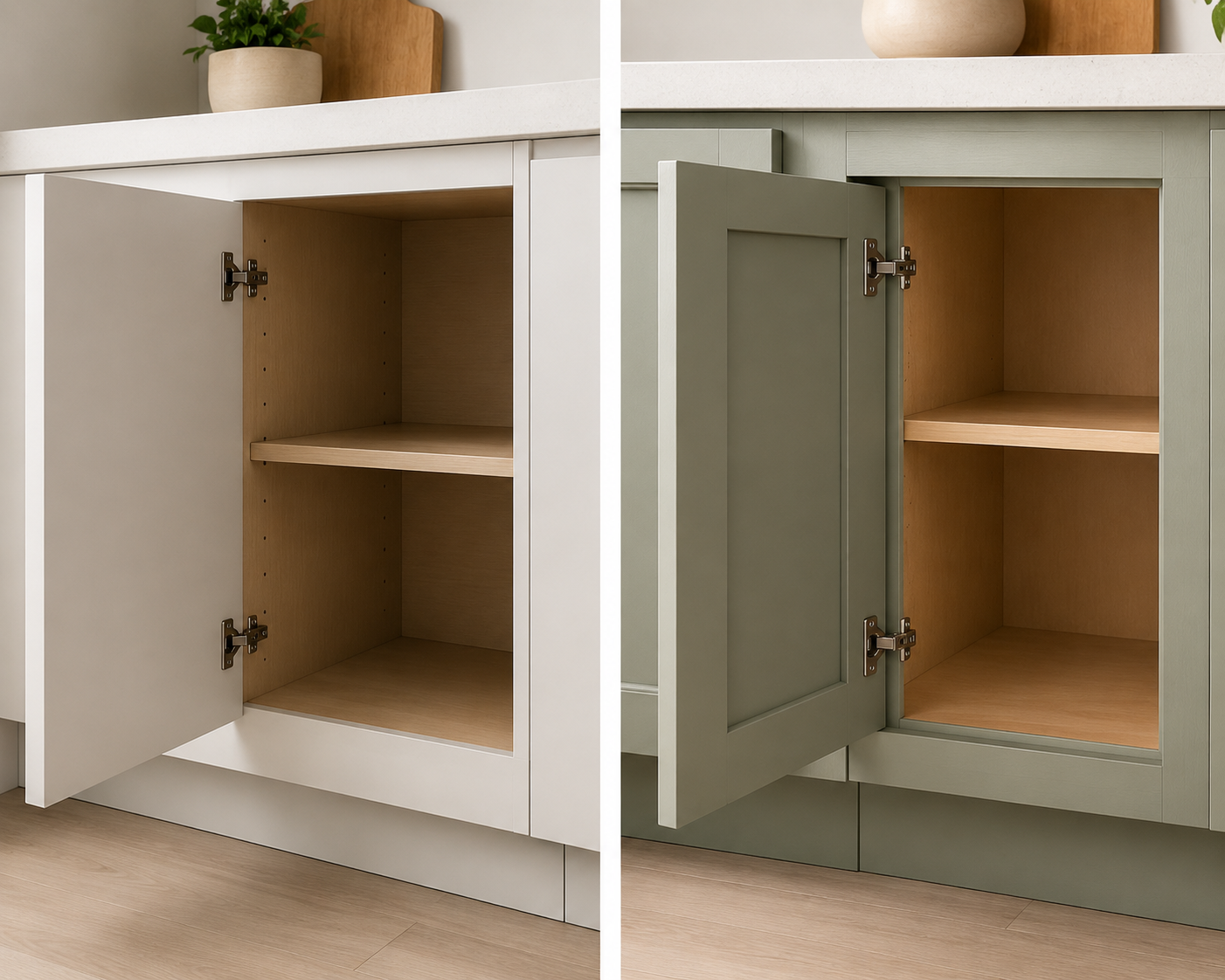
Frameless cabinets (also called full-access or European-style cabinets) have no front frame; doors and drawers attach directly to the cabinet box. Face-frame cabinets have a solid wood frame attached to the front of the box, with doors and drawers mounted to that frame. The construction method affects appearance, storage access, cost, and installation.
What Are Frameless Cabinets?
Frameless cabinet construction originated in Europe and became popular in the US as modern and contemporary kitchen design took hold. The defining feature is simple: there is no frame on the front of the box. Hinges and drawer slides mount directly to the interior walls of the cabinet.
This creates a cleaner, flatter door-to-door appearance with minimal gap between adjacent doors, typically just 1/8 inch. It also means the full width of the cabinet interior is accessible, which makes a measurable difference in how usable deep base cabinets feel.
What Are Face-Frame Cabinets?
Face-frame construction is the traditional American cabinetry standard. A solid wood frame, typically 1.5 inches wide, is glued and stapled to the front of the cabinet box before doors and drawers are attached. The frame adds structural rigidity and provides a surface for hinge mounting.
The visible frame between adjacent doors and along the cabinet perimeter is a design feature in traditional, transitional, and craftsman kitchens. It also allows for decorative details like applied molding and beaded insets that read as high-end craftsmanship.
Which Cabinet Style Gives You More Storage Space?
Frameless cabinets provide slightly more accessible interior storage because there is no front frame, reducing the door opening. In a 21-inch-wide base cabinet, frameless construction typically yields an opening 1.5–3 inches wider than a face-frame. For most homeowners, the practical difference is most noticeable in corner cabinets and base drawers.
Here's why this matters in real kitchens:
Base cabinets: Frameless doors open to the full box width. In face-frame cabinets, the stile (vertical frame member) reduces the usable opening by up to 1.5 inches on each side.
Corner cabinets: The difference is dramatic. Face-frame corners can feel awkward to access. Frameless corner solutions (lazy Susans, pull-outs) integrate more cleanly.
Wall cabinets: The storage difference is less significant; most homeowners don't notice it in upper cabinets.
For homeowners doing heavy cooking with large pots, sheet pans, or appliances that need to be stored and retrieved regularly, frameless construction can meaningfully improve daily usability.
Which Cabinet Construction Style Looks Better?
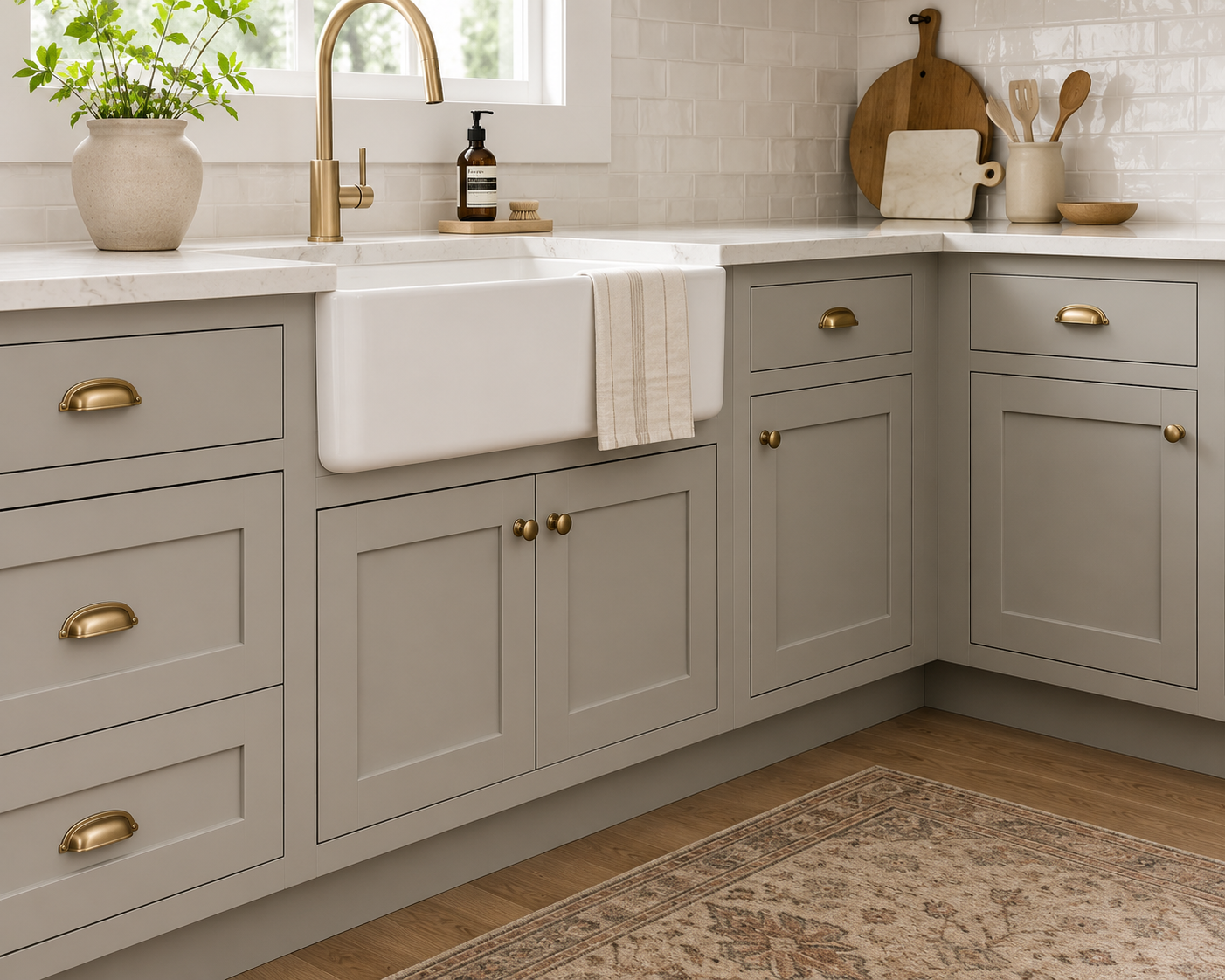
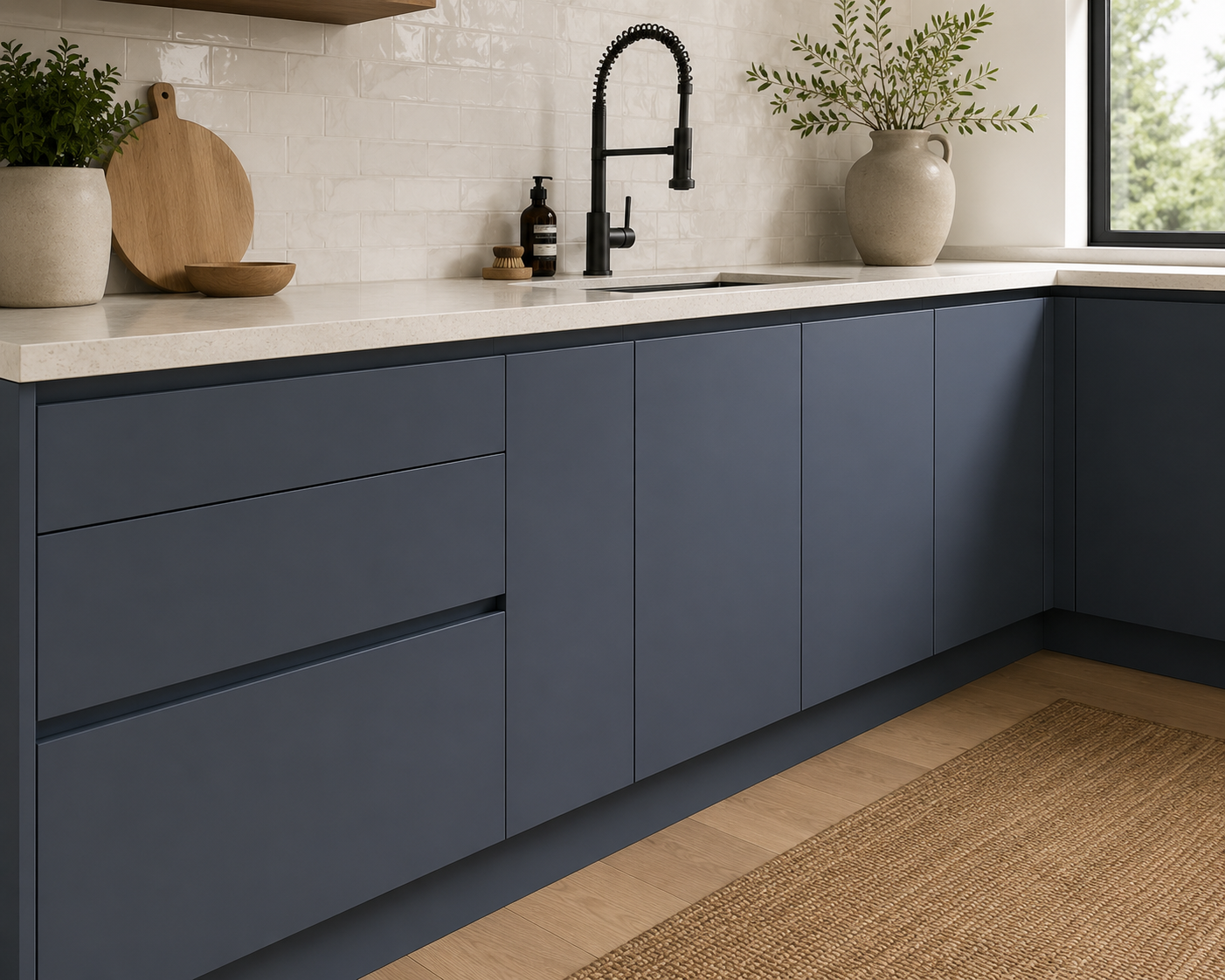
Neither style looks inherently better; they serve different design aesthetics. Frameless cabinets suit contemporary, modern, and minimalist kitchens. Face-frame cabinets suit traditional, craftsman, shaker, and transitional styles. The "right" look depends entirely on your home's architecture and your personal design vision.
When Frameless Cabinets Look Best
Flat-panel or slab door styles with minimal ornamentation
High-gloss or painted finishes where clean lines are the feature
Open-concept kitchens where cabinetry is meant to recede visually
Contemporary or European-influenced home designs
When Face-Frame Cabinets Look Best
Shaker, inset, and raised-panel door styles
Kitchens with decorative molding, pilasters, or furniture-style details
Traditional, transitional, or craftsman homes in the DC/NoVA area
Spaces where the cabinetry itself is a design focal point
The Inset Option: A High-End Hybrid Look
One of the most visually refined options available in face-frame cabinetry is the inset door, where doors and drawers sit flush inside the face frame rather than overlaying it. This is the hallmark of high-end, furniture-quality cabinetry, and it requires the kind of precision that only custom shops like Bullseye Wood can deliver consistently.
Are Frameless Cabinets Stronger Than Face-Frame Cabinets?
Face-frame cabinets are generally considered more structurally rigid because the solid wood front frame adds stiffness to the box. However, frameless cabinets built with thick (3/4-inch) plywood boxes are extremely strong and suitable for any residential application. The distinction matters most in heavy-use commercial settings, not typical home kitchens.
What Really Determines Cabinet Durability
Construction quality matters far more than frame style:
Box material: Solid plywood (3/4 inch) outperforms particleboard in both styles, it holds screws better, resists moisture, and doesn't sag under load over time
Joinery method: Dovetail or box-joint drawers outlast stapled construction regardless of frame type
Hardware: Soft-close hinges and drawer slides from quality manufacturers (Blum, Hettich, Grass) perform for decades
Finish: Conversion varnish or catalyzed lacquer resists daily wear better than standard paint or stain finishes
At Bullseye Wood, every cabinet, frameless or face-frame, is built in their Tysons-area millshop with premium materials and hardware, not outsourced to reduce costs.
Which Style Is Easier to Install?
Face-frame cabinets are generally more forgiving to install because the face frame can hide minor gaps and alignment issues at walls and corners. Frameless cabinets require greater precision during installation; small misalignments are visible since there is no frame to conceal them.
For professional installers (as opposed to DIY), both styles are manageable. But in older NoVA and DC homes with walls that aren't perfectly plumb or corners that aren't exactly square, which describes a significant portion of the housing stock in Arlington, Alexandria, and Fairfax, face-frame construction offers practical installation advantages.
This is worth discussing with your cabinet maker before making a final decision, especially if your project involves a vintage home or an irregular floor plan.
Frameless vs. Face-Frame: Which Costs More?
The cost difference between frameless and face-frame cabinets is not dramatic when both are custom-built to order. In production cabinetry, frameless can sometimes be less expensive due to simpler construction. In custom cabinetry, the price is primarily driven by material choice, door style, finish, and hardware, not the frame construction alone.
What Actually Drives Custom Cabinet Costs
Wood species: Painted MDF vs. stained maple vs. quarter-sawn white oak differ significantly in material cost
Door style: Flat slab vs. shaker vs. raised panel vs. inset, each has different milling complexity
Finish type: Standard painted vs. glazed vs. high-gloss two-stage finishes
Hardware: Entry-level vs. European soft-close systems (Blum Tandembox, for example)
Special features: Pull-out shelves, roll-outs, built-in organizers, appliance garages
When comparing quotes, don't compare frame style; compare specifications. A face-frame cabinet in solid cherry with inset doors and premium hardware will cost more than a frameless cabinet in painted MDF, but the difference is driven by materials and craftsmanship, not the frame.
Frameless vs. Face-Frame: Side-by-Side Comparison
| Feature | Frameless | Face-Frame |
|---|---|---|
| Style | Contemporary, modern, European | Traditional, transitional, craftsman |
| Storage Access | Slightly more, full box opening | Slightly less, frame reduces the opening |
| Door Gap Between Cabinets | ~1/8 inch | ~1/4–3/8 inch (frame visible) |
| Structural Rigidity | Strong (depends on box thickness) | Very strong, frame adds rigidity |
| Installation Tolerance | Less forgiving | More forgiving of imperfect walls |
| Inset Door Option | No | Yes, a premium upgrade |
| Best for Older DC/NoVA Homes | Less ideal | Often a better fit |
| Custom Pricing | Comparable | Comparable |
Common Misconceptions About Frameless and Face-Frame Cabinets
Misconception 1: "Frameless means cheaper quality." Not true. Frameless construction is standard in European luxury cabinetry. Quality is determined by materials and craftsmanship, not frame style.
Misconception 2: "Face-frame is old-fashioned." Also not true. Inset face-frame cabinetry represents the pinnacle of American furniture-style craftsmanship , it's highly sought after in high-end DC-area renovations.
Misconception 3: "You can always tell the difference from photos." The visual difference is often subtle, especially with full-overlay doors. The construction distinction matters more for storage access and installation than for the overall visual impression.
Misconception 4: "Stock cabinets come in both styles too, so there's no need to go custom." Stock frameless and face-frame cabinets use different materials, tolerances, and hardware than custom-built options. The gap isn't just style; it's durability, fit, and longevity.
Expert Tips for Choosing the Right Cabinet Construction
Match the cabinet style to your home's architecture: a traditional colonial in McLean will often look and feel right with face-frame construction; a contemporary renovation in Arlington may call for frameless
Visit a showroom or portfolio before deciding: seeing both styles in person changes how you evaluate them from photos alone
Ask your cabinet maker what they build best: shops that specialize in one construction type typically deliver better results than those that offer everything equally
Think about your daily routine: do you reach for heavy items in deep base cabinets frequently? Do you have young children who will hang on cabinet doors? These factors matter
Consider future resale value: in the DC/NoVA market, both styles photograph well and appeal to buyers when they're high-quality custom builds
Don't over-optimize for storage percentages: the difference in usable interior space between frameless and face-frame is real but often overstated; for most homeowners, organization systems matter more than the extra inch of opening
Frequently Asked Questions
-
Frameless cabinets have no front frame; doors mount directly to the box for a clean, contemporary look and slightly wider door openings. Face-frame cabinets have a solid wood frame on the front, adding rigidity and supporting traditional design styles like shaker and inset.
-
Both are popular, but face-frame construction, especially with shaker doors, remains the dominant choice in traditional and transitional homes throughout Fairfax, McLean, Arlington, and Alexandria. Frameless is increasingly popular in newer construction and contemporary remodels.
-
Yes, in most cases. Frameless construction's clean lines, minimal door gaps, and flat-panel door compatibility make it the natural choice for contemporary and modern kitchen designs.
-
No. Inset doors, where the door sits flush within the cabinet front, require a face frame to mount within. Inset construction is one of the signature features of high-end face-frame cabinetry.
-
Bullseye Wood Specialties completes custom cabinet projects in approximately 5 weeks from design approval through production at their Tysons-area millshop.
-
Yes. Bullseye Wood builds both construction types to order for kitchens, bathrooms, closets, libraries, wine cellars, and built-ins across the Northern Virginia and DC metro area.
-
Both hold up well when built with quality materials. The key factors are box material (plywood over particleboard), drawer joinery, hardware quality, and finish type, not the frame construction itself.
Conclusion
Frameless or face-frame, the debate sounds more definitive than it actually is. In practice, the better choice is the one that fits your design vision, your home's character, your storage needs, and the expertise of the builder constructing it.
For most homeowners in Northern Virginia and the DC metro area, that decision becomes clearest in a conversation with a custom cabinet shop that has built both, can show you both in a portfolio, and can tell you honestly what works best for your specific project.
Bullseye Wood Specialties has been having that conversation with homeowners, builders, and designers across the region for over 40 years. Whether you're drawn to the clean-line accessibility of frameless construction or the furniture-quality craftsmanship of inset face-frame cabinetry, the result starts the same way: a real conversation about what you actually need.
Ready to Start Your Custom Cabinet Project?
Bullseye Wood Specialties is a premier custom cabinet builder serving Northern Virginia and the Washington DC metro area, including Fairfax, McLean, Arlington, Alexandria, Great Falls, and Bethesda. Every cabinet is designed, built, and finished in their Tysons-area millshop with a streamlined 5-week process.
👉 Start your project with Bullseye Wood, or explore the portfolio to see frameless and face-frame builds side by side.
📞 Call directly: (703) 556-9000
Serving builders, architects, interior designers, and homeowners across Northern Virginia and the DC area.