Wall-Mounted vs. Freestanding Garage Cabinets: Which Is the Better Choice?
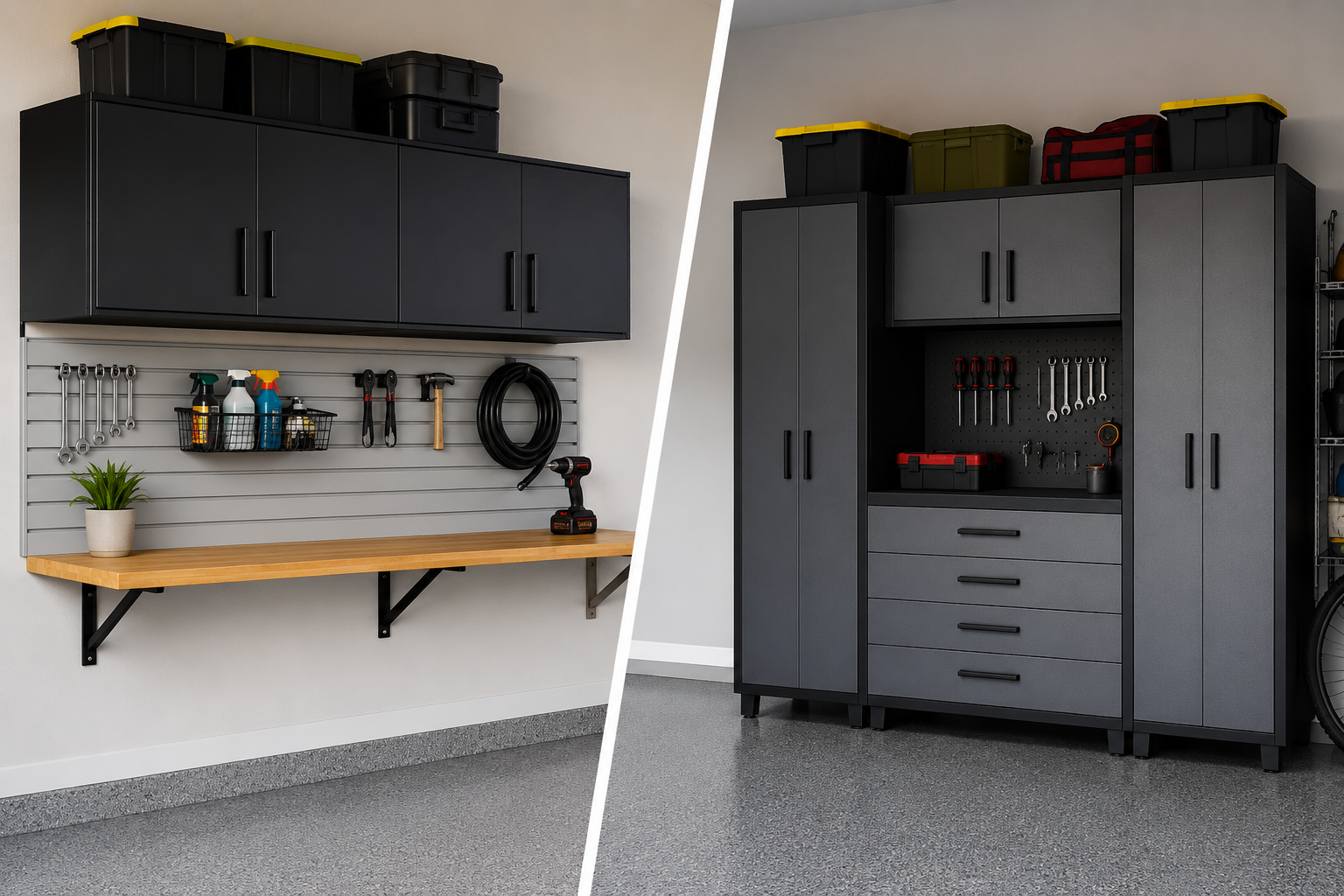
Your garage is pulling double duty, parking, storage, workshop, maybe even a home gym. At some point, the plastic bins stacked in the corner stop cutting it, and you start thinking about real cabinetry. Then comes the first decision almost every homeowner gets stuck on: do I mount cabinets to the wall, or keep them freestanding?
Both options solve the storage problem. But they solve it differently, and the wrong choice for your space can mean wasted floor space, cabinets that don't last, or a layout that fights how you actually use the garage.
Bullseye Wood Specialties in Fairfax, VA, has been building custom cabinetry for homeowners and builders across Northern Virginia and the DC metro area for over 40 years, including purpose-built garage storage solutions. Here's exactly how to think through this decision.
Key Takeaways
Wall-mounted cabinets free up floor space, deter moisture damage, and create a cleaner look, ideal for smaller garages or finished spaces
Freestanding cabinets are flexible, portable, and easier to install, but take up floor space and can be vulnerable to moisture at the base
For most Northern Virginia homeowners, wall-mounted custom cabinetry delivers better long-term value and a more finished appearance
The best choice depends on your garage size, how finished the space is, and whether you plan to move
Bullseye Wood builds custom garage cabinetry, wall-mounted and freestanding, designed and produced in their Tysons-area millshop
What Is the Difference Between Wall-Mounted and Freestanding Garage Cabinets?
Wall-mounted garage cabinets attach directly to wall studs and hang off the floor. Freestanding cabinets sit on the floor independently and can be moved or reconfigured. The choice affects floor space, moisture exposure, installation complexity, and how the finished garage looks and functions.
Wall-Mounted Garage Cabinets
Wall-hung cabinets are anchored into studs, keeping the entire cabinet body elevated off the concrete floor. This approach is familiar from kitchen design, and for good reason. Lifting storage off the floor eliminates a major threat in garages: ground-level moisture, flooding, and the general abuse that garage floors take from vehicles, equipment, and weather.
They also free up the floor entirely, which matters when you're parking cars, using the space as a workshop, or want the option to epoxy-coat the floor without working around cabinet bases.
Freestanding Garage Cabinets
Freestanding units sit directly on the floor and require no wall attachment. They're typically quicker to install, easier to reposition, and the preferred option for renters or homeowners who may want to take the cabinets with them when they move.
The tradeoff: they occupy floor space, can shift over time, and the base is exposed to whatever the garage floor encounters, water, road salt tracked in from winter, and oil spills.
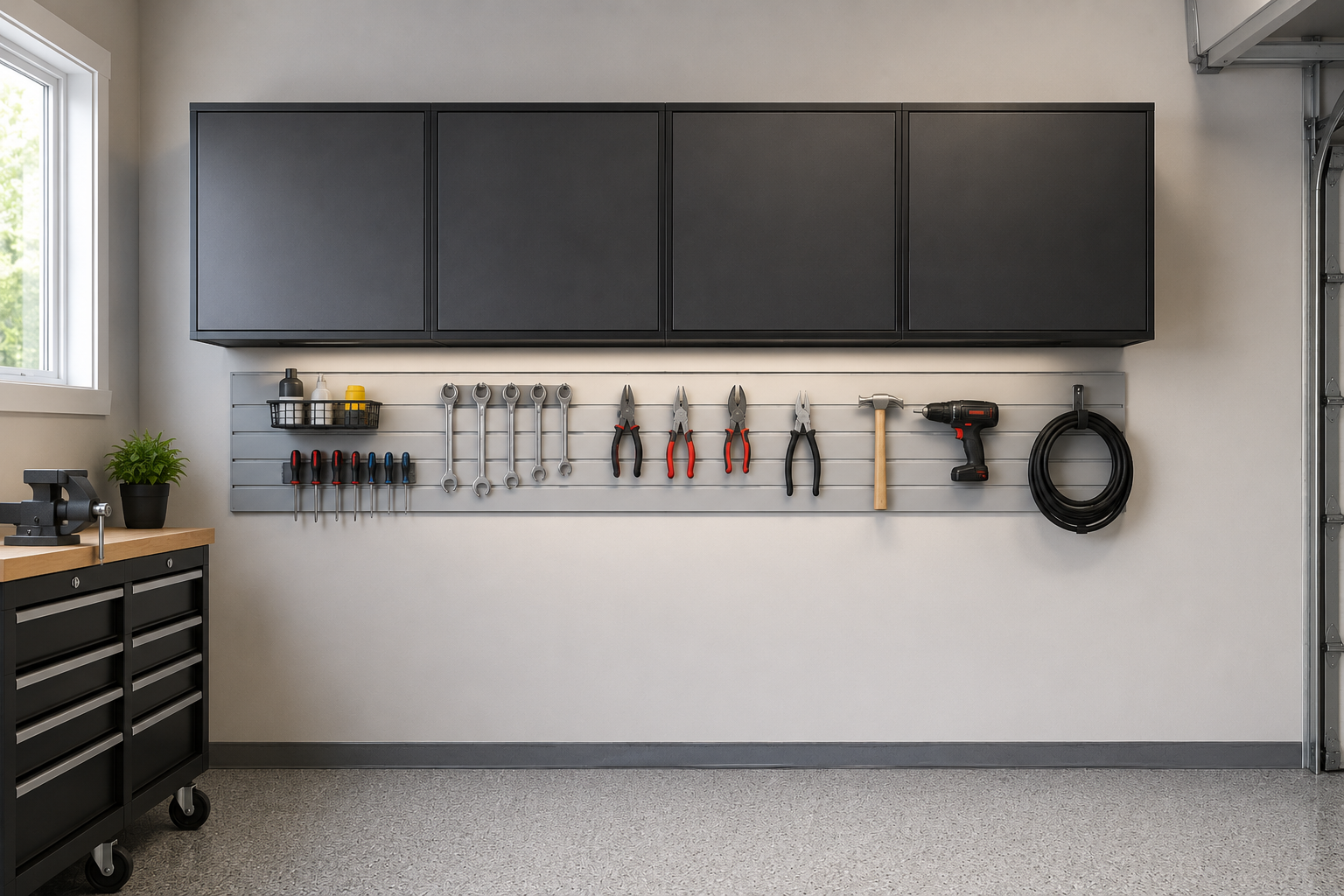
What Are the Pros and Cons of Wall-Mounted Garage Cabinets?
Wall-mounted garage cabinets are the higher-performing option for most permanent garage installations. They protect against floor moisture, maximize usable floor space, and create a cleaner, more finished aesthetic, but require proper stud installation and are not easily relocated.
Pros
Floor space stays clear: park closer to the wall, add a workbench below, or epoxy the entire floor without interruption
Moisture protection: concrete floors absorb and release moisture; keeping cabinets elevated prevents warping, mold, and base deterioration over time
Cleaner look: continuous wall runs with no visible legs or base gaps read as intentional, finished storage
Easier floor cleaning: sweep and mop under the entire cabinet run without moving anything
Maximizes vertical space: can stack upper and lower wall cabinets from floor to ceiling efficiently
Cons
Installation is more involved: it requires locating studs and properly distributing the load, especially for heavy upper cabinets
Not portable: if you move, the cabinets typically stay with the house
Wall condition matters: poorly finished or damaged drywall in older garages may need prep work before mounting
Weight limits apply: the wall and stud spacing determine how much load each run can hold
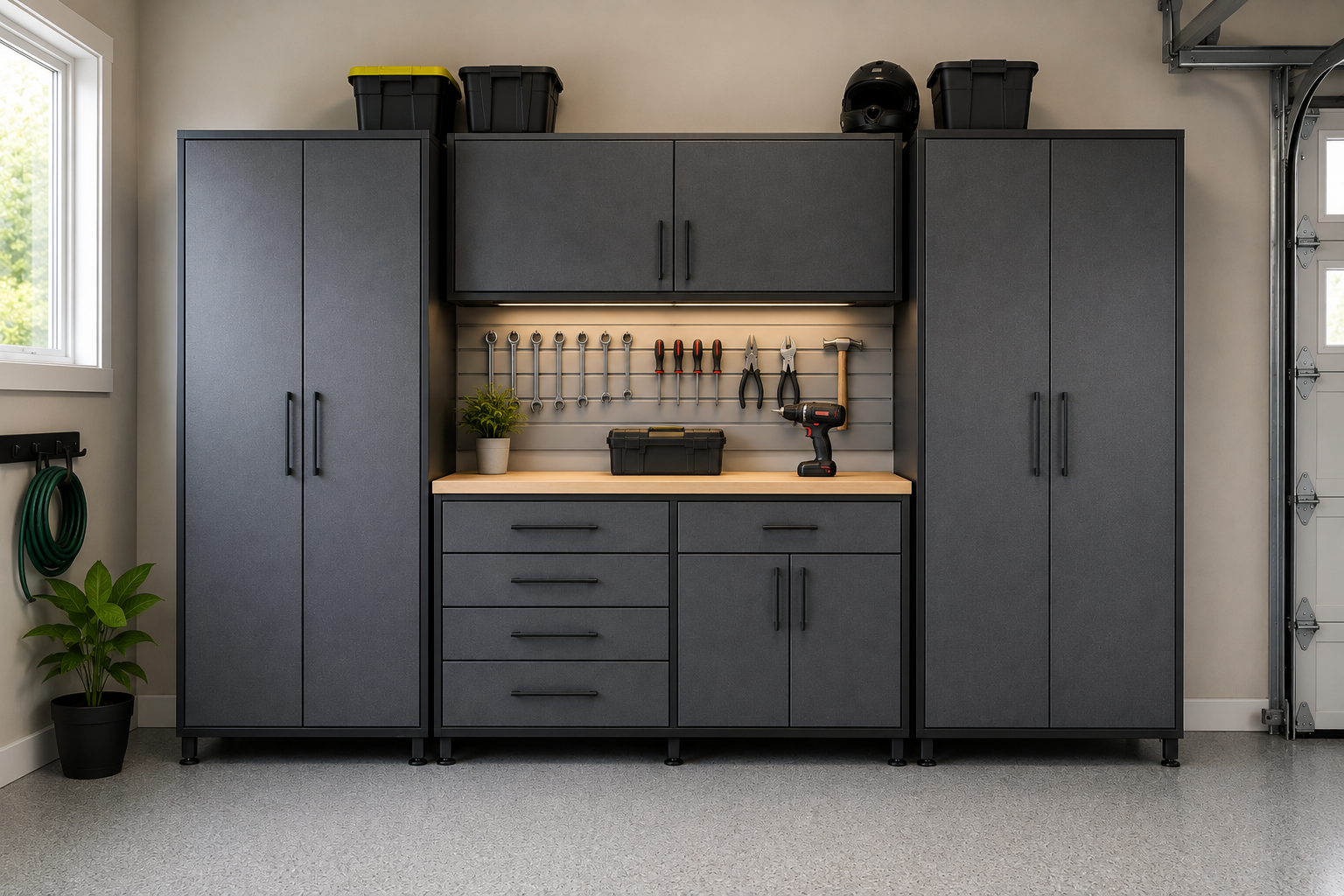
What Are the Pros and Cons of Freestanding Garage Cabinets?
Freestanding garage cabinets offer flexibility and easier installation, making them the right choice for renters, temporary setups, or garages where wall mounting isn't practical. The downsides are floor space consumption, moisture exposure at the base, and a less finished overall appearance.
Pros
No installation complexity: place them where you want, adjust layout as needs change
Portable: take them with you when you move
Good for unfinished or irregular garage walls: no need to locate studs or deal with wall prep
Easier to add or reconfigure: expand storage by adding units without wall work
Cons
Takes up floor space: especially noticeable in single-car or smaller two-car garages
Base moisture exposure: direct contact with concrete floors creates a risk of warping or rust, depending on the material
Can shift or tip: heavy loads in upper drawers raise the center of gravity; securing to the wall is recommended anyway for safety
Less integrated appearance: gaps between units, visible bases, and mismatched heights can look cluttered over time
Which Garage Cabinet Style Is Better for Northern Virginia Homes?
For most permanent homeowners in Northern Virginia, wall-mounted custom cabinetry is the better long-term investment. The region's climate, humid summers, cold winters, and freeze-thaw cycles create significant moisture movement in uninsulated garages, making elevated storage the smarter structural choice.
NoVA garages face a specific set of conditions:
Humidity: DC-area summers regularly hit 80%+ relative humidity. Concrete floors sweat, and cabinet bases sitting directly on concrete absorb that moisture over time.
Winter road salt: Cars tracked with road salt and brine from Virginia winters bring corrosive material directly into the garage, right to floor level, where freestanding bases sit.
Resale value: In McLean, Great Falls, Arlington, and Fairfax, buyers respond to finished, custom-built garages. Wall-mounted cabinetry reads as a permanent upgrade; freestanding units often don't transfer the same value perception.
Wall-Mounted vs. Freestanding: Side-by-Side Comparison
| Factor | Wall-Mounted | Freestanding |
|---|---|---|
| Floor Space | Fully clear the cabinets below | Cabinets occupy the floor footprint |
| Moisture Protection | Elevated, protected from floor moisture | Base sits on concrete, exposure risk |
| Installation | Requires stud-finding and anchoring | Place and go |
| Portability | Stays with the house | Can be moved or taken when you relocate |
| Appearance | Clean, integrated, finished look | Functional; harder to achieve a polished result |
| Weight Capacity | Determined by the wall structure | Determined by the cabinet frame |
| Best For | Permanent homeowners, finished garages | Renters, temporary setups, flexibility-first |
| Custom Options | Full custom sizing, materials, and finish | Often limited to standard sizes |
Common Mistakes Homeowners Make With Garage Cabinets
The most common mistake is choosing freestanding cabinets for a permanent home to save upfront cost, then replacing them within 5–7 years when moisture damage, warping, or visual dissatisfaction sets in.
Other pitfalls to avoid:
Not accounting for the garage door swing or track: layout planning matters before a single screw goes into the wall
Choosing materials designed for interior use: garage environments are harder on finishes; materials and coatings need to be selected for the conditions
Underestimating storage needs: build in more capacity than you think you need; garages fill faster than kitchens
Ignoring the floor first: if you want an epoxy or polyurea floor coating, do it before cabinets go in, not after
Expert Tips for Getting the Most From Garage Cabinetry
Plan around your car doors first: measure fully opened doors and mark clearances before finalizing cabinet placement
Incorporate a workbench run: a 36-inch-high counter between lower wall cabinets creates a functional workspace without sacrificing storage
Use overhead space: combine wall-mounted cabinets with ceiling-mounted overhead storage for seasonal items
Specify a durable finish: conversion varnish or industrial-grade lacquer outperforms standard cabinet finishes in garage humidity and temperature swings
Include lockable sections: valuable tools, chemicals, and equipment benefit from dedicated locked storage within the cabinet run
Frequently Asked Questions About Garage Cabinets
-
For permanent homeowners, wall-mounted cabinets are generally the better choice; they protect against floor moisture, free up floor space, and create a cleaner, more finished garage. Freestanding cabinets work best for renters or those who want flexibility.
-
This depends on the wall structure, stud spacing, and mounting hardware. A properly anchored wall cabinet run mounted into 16-inch-on-center studs with quality hardware can support several hundred pounds. Your cabinet builder should specify load ratings during design.
-
Freestanding cabinets should be anchored to the wall even when not fully wall-mounted, as a safety measure against tipping, especially if they'll hold heavy tools or equipment above waist height.
-
Plywood-box construction with a durable finish (conversion varnish or similar) outperforms MDF or particleboard in the humidity and temperature swings common to NoVA garages. Solid wood face frames with quality hardware complete the package.
-
Yes. Bullseye Wood Specialties designs and builds custom garage cabinetry, wall-mounted and freestanding, for homeowners across Northern Virginia and the DC metro area, with a typical 5-week production turnaround.
-
Start with your car count and door clearances, then map your storage categories: tools, sports equipment, seasonal items, and chemicals. A custom cabinet shop can help you translate that into a functional layout during the design phase.
Conclusion
Wall-mounted or freestanding, both can work. But for most homeowners in Northern Virginia putting down roots in a home they plan to keep and eventually sell, wall-mounted custom cabinetry is the smarter long-term investment: better moisture protection, more floor space, and a finished appearance that adds real value to the property.
The decision gets easier when you work with a builder who has seen every garage configuration in the region and can tell you honestly what performs.
Bullseye Wood Specialties has been building custom cabinetry across Fairfax, McLean, Arlington, Alexandria, and the broader DC metro area for over 40 years. Garage projects start the same way every other project does, with a conversation about how you actually use the space.
Ready to Transform Your Garage?
Bullseye Wood Specialties builds custom garage cabinetry, wall-mounted, freestanding, and full garage organization systems, for homeowners and builders across Northern Virginia and the Washington DC metro area.
👉 Start your garage cabinet project
Serving Fairfax, McLean, Arlington, Alexandria, Great Falls, Vienna, Bethesda, and surrounding areas.