Shaker-Style Bathroom Vanities: Why the "Boring" Cabinet Wins Every Time
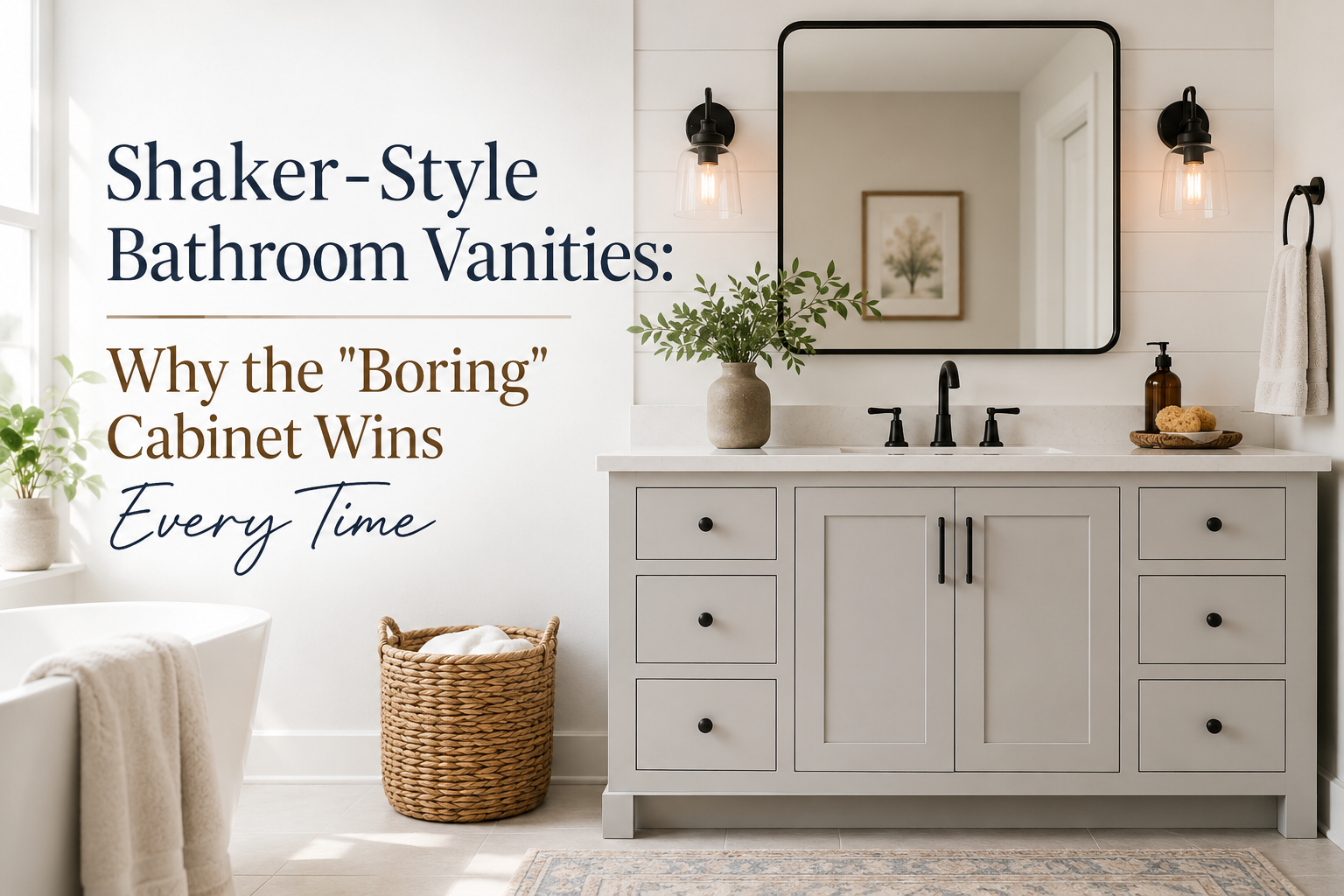
Let's get this out of the way first: a shaker-style bathroom vanity is a cabinet with a flat, recessed center panel framed by four simple strips of wood, no carvings, no fuss, no drama. That's it.
That's the whole secret. And yet, this "plain" design has outlasted basically every flashy bathroom trend since the 1800s, which is a pretty wild flex for something that looks this simple.
If you're renovating and wondering whether shaker style is still worth it, short answer: yes, and here's everything you need to know before you commit.
Key Takeaways
A shaker vanity = a 5-piece door with a flat recessed panel. Clean lines, zero ornamentation.
It's not a trend; it's a default. Shaker has stayed relevant since the 1800s, and design experts still call it the safest long-term bet for resale value.
Twist: homeowners are leaning into warmer wood tones (white oak, walnut) and "slim shaker" profiles instead of stark white boxes.
Custom vs. stock matters more in bathrooms than kitchens, because humidity destroys cheap materials fast.
Cost depends on wood, size, and finish; custom costs more upfront but skips the swelling-drawer problem stock cabinets get in 3-5 years.
What Exactly Is a Shaker-Style Bathroom Vanity?
A shaker vanity is defined by its five-piece door: four frame pieces surrounding one flat, recessed center panel. No moldings, no glass inlays, no carved details, just clean horizontal and vertical lines.
The style comes from the Shaker religious community, who believed furniture should be useful before it's pretty (form follows function, basically, before that was even a phrase). Turns out "useful and simple" ages really, really well. That's why you'll see the same door style in a 1920s farmhouse bathroom and a brand-new DC condo.
Is Shaker Style Still Popular, or Is It Getting Dated?
Still popular, arguably more relevant than ever, just wearing a slightly different outfit. Designers are moving away from cool grays and stark white toward warmer, natural wood tones like white oak and walnut, and a "slim shaker" cut (narrower rails and stiles) is becoming the go-to update for anyone who wants the classic look without it feeling boxy.
So no, you don't need to worry about your new vanity looking dated by 2030. You just have some options on how "classic" vs. "updated" you want it to feel:
Traditional shaker: wider frame, timeless, works in period homes
Slim shaker: narrower rails, reads more modern/transitional
Painted shaker: warm whites, sage, deep blue-green with brushed brass or nickel hardware
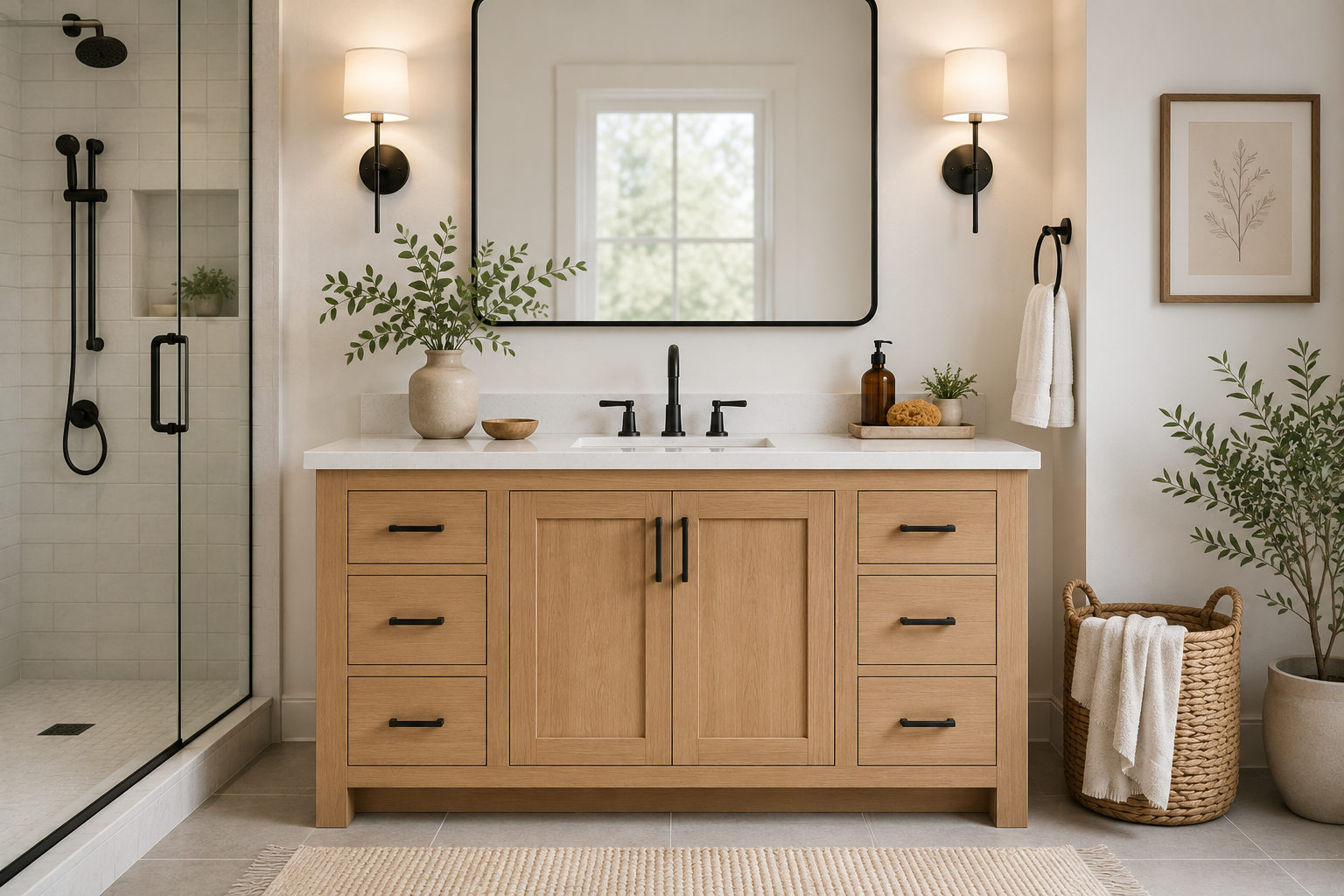
Natural wood shaker: white oak or walnut, left to show the grain
Custom vs. Stock Shaker Vanities: What's Actually Different?
The door might look similar in a showroom photo. The box behind it usually isn't, and in a bathroom, that box is doing all the heavy lifting against humidity, daily splashing, and steam.
| Feature | Stock / Big-Box | Custom-Built |
|---|---|---|
| Box Material | Often particleboard | Solid plywood boxes |
| Fit | Standard sizes only | Built to your exact wall and plumbing layout |
| Moisture Resistance | Weaker — can swell over time | Built for bathroom-grade durability |
| Drawer Glides & Hinges | Varies, often basic hardware | Soft-close as standard |
| Wood Species & Finish Options | Limited selection | Fully customizable |
| Lead Time | Fast — available off the shelf | Several weeks, but built once and built right |
If your bathroom has an odd layout, off-center plumbing, or you just don't want the same vanity as your neighbor's, custom wins by a mile. If you're in a rental or flipping on a tight budget, stock can absolutely do the job.
What Wood Should You Use for a Bathroom Vanity?
Whatever wood you pick, the box behind the door matters more than the wood species people usually ask about. Plywood boxes hold up better than particleboard in humid rooms because they resist swelling and hold screws more securely over time — which is exactly why bathroom cabinet boxes get treated differently than living room ones.
For the doors and finish, popular picks include:
White oak: Light, grainy, currently the most requested "warm natural" finish
Maple: Takes paint beautifully if you want a solid color
Cherry: Deeper, richer tone for a more traditional bathroom
MDF (painted only): Smooth, consistent paint finish, but should never be the box material in a bathroom
Common Mistakes People Make When Choosing a Shaker Vanity
Confusing "flat-panel" boxy cabinets with true shaker. If there's no recessed panel and no visible frame, it's not shaker, even if the store calls it that.
Choosing MDF for the whole cabinet box in a humid bathroom. Great for painted doors, bad idea structurally where steam and splashes are constant.
Skipping the hardware decision until the end. Hardware finish (brushed nickel vs. brass vs. black) changes whether the same door reads modern, traditional, or transitional.
Not measuring for existing plumbing. Stock vanities assume standard rough-ins. Older homes rarely have them.
Assuming "custom" always means "expensive." It's often close in price to a mid-tier stock vanity once you factor in how much you'd spend replacing a swollen cheap one in five years.
Expert Tips for Getting It Right
Match the panel width to your bathroom size. Wider rails feel more traditional; narrower "slim shaker" rails feel more current in a smaller space.
Go plywood for the box, always; this is the single biggest durability decision you'll make.
Pick hardware last, but budget for it early. It's a small cost that changes the whole personality of the piece.
If your home is older, get exact measurements taken in person before ordering anything; DC-area rowhouses and older Fairfax homes rarely have standard dimensions.
Ask to see the drawer construction, not just the door. Dovetail joints and soft-close glides tell you more about long-term quality than the finish color does.
Frequently Asked Questions
-
Shaker doors have a recessed center panel inside a visible frame. Flat-panel doors are a single smooth slab with no frame or recess. Shaker reads more traditional/transitional; flat-panel reads more modern/minimal.
-
Yes. It remains one of the top-recommended styles for resale value and long-term relevance, with the main update being warmer wood tones and slimmer door profiles rather than the style itself changing.
-
White oak and maple are the most requested right now for their grain and durability, but the box construction (solid plywood, not particleboard) matters more for bathroom longevity than the species itself.
-
Custom typically costs more upfront, but pricing gaps have narrowed for mid-range stock options. The bigger cost difference shows up later — cheap boxes often need replacing within 5-10 years in a humid bathroom, while a well-built custom vanity doesn't.
-
Yes, that's one of its biggest advantages. Because the design is so simple, it can be repainted or restored to update the look without replacing the entire cabinet
The Bottom Line
Shaker style isn't a trend you're "still" doing — it's the style everything else eventually gets compared to. Simple, well-built, and endlessly easy to update with new hardware or paint down the line. The real decision isn't shaker-or-not; it's stock-or-custom, and in a room that deals with steam and splashing every single day, that decision matters more than most people realize going in.
We've been building custom bathroom vanities, shaker and otherwise, out of our own Fairfax-area millshop for over 40 years, for everything from historic DC rowhouses to new-construction primary suites. If you want to see how a custom build compares to what's sitting in a showroom, our guide on how custom vanities improve bathroom design and functionality breaks it down further.
Ready to talk through your bathroom? Contact Bullseye Wood for a consultation, or learn more about our team and process before you get started.