

MDF vs. Solid Wood Cabinet Doors: Pros, Cons, and Which One You Actually Need
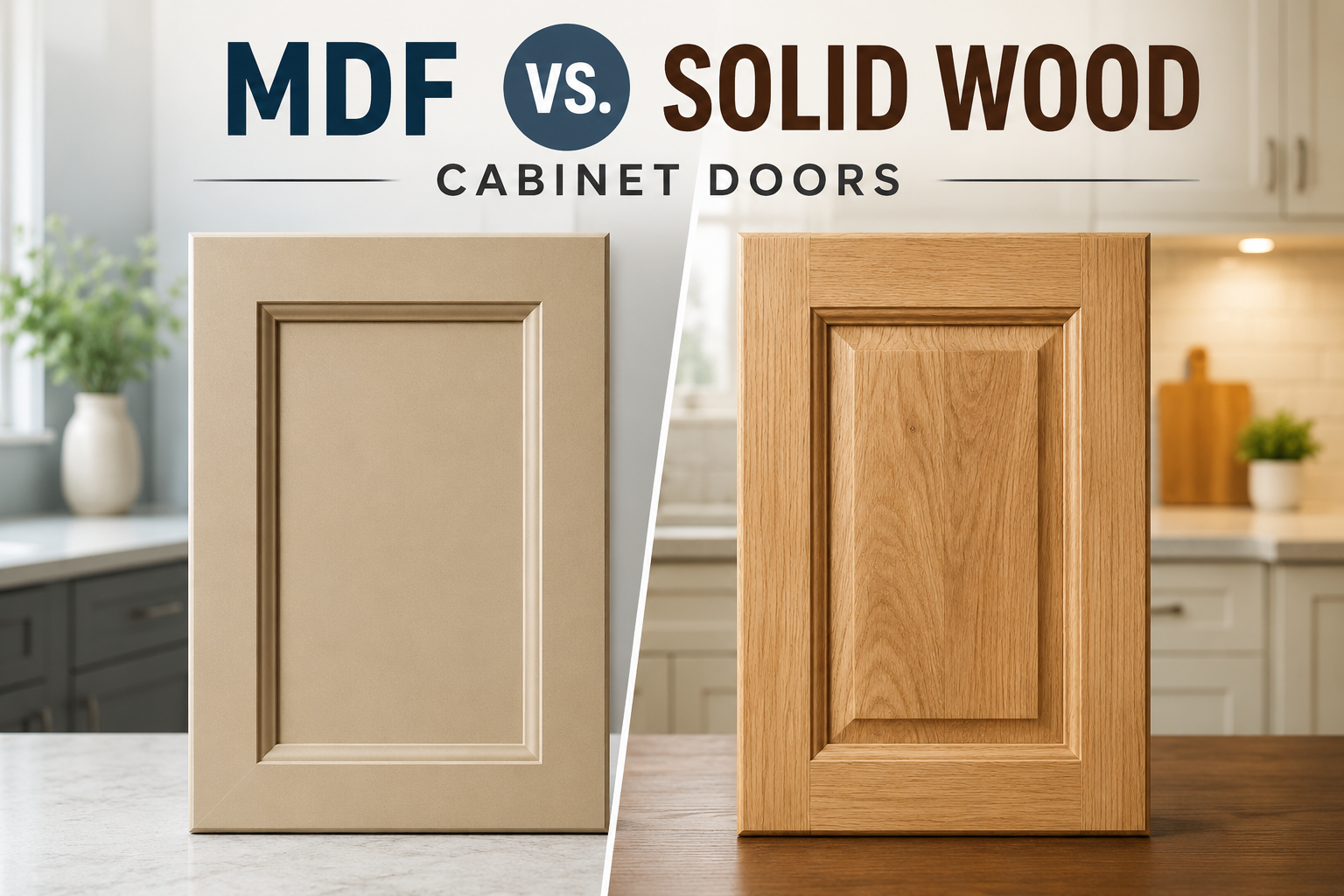
MDF is the smoother, cheaper, paint-friendly option that won't warp on you, while solid wood is the pricier, tougher, refinishable option with real grain and real character.
Neither one is "the bad one", despite what half the internet wants you to believe. The right choice depends on where the cabinet is going, how it'll be finished, and how much you actually care about grain patterns showing up in your Instagram photos. Let's break it down properly.
Key Takeaways
MDF = engineered wood fibers pressed with resin. Ultra-smooth, holds paint beautifully, resists warping, cheaper, but harder to repair if damaged.
Solid wood = real lumber. More expensive, has natural grain, can be stained or painted, and can be sanded/refinished for decades.
Neither is "cheap" or "better" by default. MDF isn't a downgrade — it's the right material for specific jobs, same as solid wood is.
Most quality kitchens use both, just in different places: MDF for painted doors, solid wood or plywood for structural parts and stained doors.
The real question isn't MDF vs. wood. It's: paint or stain? Humid room or dry room? Budget or heirloom piece?
What's the Actual Difference Between MDF and Solid Wood?
MDF (medium-density fiberboard) is wood fibers, resin, and wax pressed together into a dense, uniform panel: no grain, no knots, totally consistent. Solid wood is exactly what it sounds like: real lumber cut from a tree, keeping its natural grain, color variation, and character.
Think of it this way: MDF is like a perfectly smooth canvas. Solid wood is like a canvas that already has a little bit of a pattern painted on it before you even start. Both can look amazing; they just behave differently.
Is MDF Actually Good for Kitchen Cabinets, or Is That a Downgrade?
MDF is a legitimately good material for cabinets, especially painted ones — it's not a "cheap out." Its smooth, grainless surface is honestly better than solid wood for a flawless painted finish, because there's no grain telegraphing through the paint over time.
Where MDF genuinely shines
Painted shaker, slab, or raised-panel doors
Large door panels (won't warp or split the way a big wood panel can)
Budget-conscious projects that still need a clean, high-end look
Consistent color/finish across an entire kitchen
Where it falls short:
Can't be stained (no grain to take the stain, and it soaks up liquid unevenly)
Scratches and dents are much harder to repair than solid wood
Not great with sustained heat exposure (skip it near ranges without ventilation clearance)
Is Solid Wood Actually Worth the Extra Cost?
Solid wood costs more upfront, but it's a material you can sand, refinish, and repair for literally decades, which is where a lot of that extra cost gets paid back over time. It's the material people mean when they say a piece of furniture "has character."
Where solid wood wins:
Natural grain and color variation (no two doors are identical)
Can be stained or painted
Scratches and dings can usually be sanded out
Adds real, tangible resale value in a lot of markets
Where it costs you:
Pricier material and labor
Expands and contracts with humidity; can warp or crack if it's poor-quality lumber or badly built
More species/grade choices to navigate (which can feel overwhelming)
MDF vs. Solid Wood: Side-by-Side Comparison
| Feature | MDF | Solid Wood |
|---|---|---|
| Cost | Lower | Higher |
| Best Finish | Paint only | Paint or stain |
| Grain | None — perfectly smooth | Natural, visible |
| Warping Risk | Very low | Moderate (depends on build quality) |
| Repairability | Difficult — hard to sand or patch | Easy — can be sanded and refinished |
| Humidity Performance | Stable, but can swell if soaked or unsealed | Can expand and contract with humidity |
| Lifespan | Long if undamaged | Very long, especially if refinished |
| Best For | Painted modern/transitional kitchens | Traditional, stained, or heirloom-style projects |
Does MDF Hold Up in Bathrooms, Kitchens, or Laundry Rooms?
MDF can hold up fine in humid rooms as long as it's properly sealed and painted — the risk isn't humidity in the air; it's direct water contact at unsealed edges, like under a leaking sink. This is exactly why the cabinet box behind the door matters as much as the door material itself.
For anything getting regular splash exposure- under-sink cabinets, laundry room base cabinets, bathroom vanities- the safer move structurally is a solid plywood box with an MDF or solid wood door on top, not an MDF box. Plywood resists moisture and holds screws better over time than particleboard or unsealed MDF ever will.
Can You Stain MDF Cabinet Doors? (Common Misconception)
No, MDF has no visible grain, so staining it just looks blotchy and uneven instead of like real wood. If you want a stained finish, solid wood is the only real option; MDF should be reserved for paint.
A lot of homeowners assume "MDF vs. wood" is really "cheap vs. expensive," when it's actually "paint vs. stain." Once you know which finish you want, the material decision basically makes itself.
Common Mistakes Homeowners Make Choosing Cabinet Materials
Assuming MDF = low quality. High-grade MDF with a proper paint finish can outperform cheap, thin solid wood.
Choosing MDF for a stained look. It physically can't take a stain the way wood does; don't fight the material.
Ignoring the cabinet box material. The door gets all the attention, but the box behind it does most of the structural work, especially in wet areas.
Skipping edge-sealing on MDF near sinks. Unsealed edges are where moisture actually gets in and causes swelling.
Picking based on price alone. A cheap wood door with poor construction can warp faster than a well-made MDF one.
Expert Tips for Choosing the Right Material
Decide paint or stain first. That single choice eliminates half the decision for you.
Use solid plywood boxes regardless of door material, especially in kitchens, baths, and laundry rooms.
Mix materials strategically. Painted MDF doors with a solid wood island or stained accent piece is a very common, very smart combo.
Ask about edge treatment on MDF doors; properly sealed edges prevent most moisture issues before they start.
Think about repair, not just install day. If a toddler or a moving day is going to dent your cabinets eventually, solid wood gives you a fix; MDF usually means a replacement panel.
Frequently Asked Questions
-
No. MDF is a solid choice for painted kitchen cabinets, offering a smoother finish than wood and better resistance to warping. It's not a downgrade — it's a different tool for a different job.
-
Solid wood typically lasts longer overall because it can be sanded and refinished repeatedly. MDF can also last many years, but once it's damaged, repair options are limited.
-
No. MDF has no natural grain, so stain sits unevenly and looks blotchy. Stained finishes require solid wood.
-
Yes, if it's properly sealed and painted, and especially if it's not the material used for the cabinet box itself. Direct water exposure at unsealed edges is the real risk, not ambient humidity.
-
For many homeowners, yes, especially for stained finishes or pieces meant to last decades, since solid wood can be refinished instead of replaced when it gets worn or damaged.
The Bottom Line
MDF and solid wood aren't rivals; they're just built for different jobs. MDF gives you a flawless painted finish and a friendlier price tag. Solid wood gives you natural character and a material that can be refinished for decades. The smartest kitchens and bathrooms usually use both, in the right places, rather than picking one material for the entire project.
At Bullseye Wood, we build every cabinet in our own Fairfax-area millshop, which means we're not locked into pushing one material over another; we choose MDF, solid wood, or plywood based on what your specific kitchen, bath, or built-in actually needs.
If you're weighing this decision for a bathroom vanity specifically, our guide on how custom vanities improve bathroom design and functionality is a good next read.
Not sure which material is right for your project?
Contact Bullseye Wood for a straight answer, or learn more about our process before you decide.
